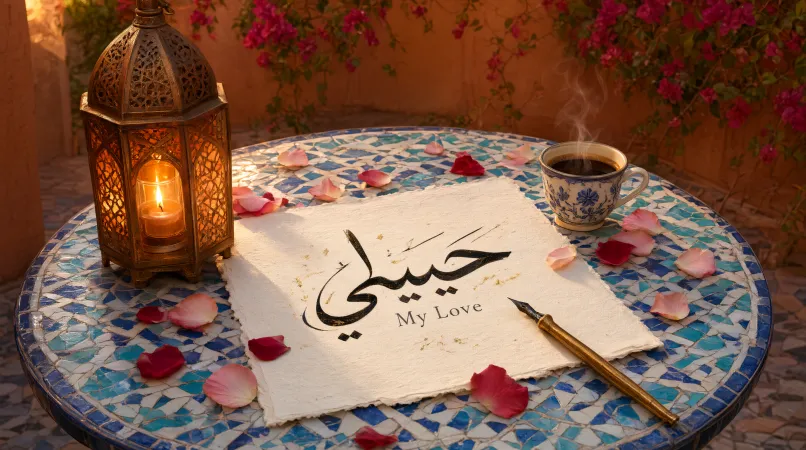
Habibti is an Arabic term of affection that usually means “my love,” “my darling,” “my dear,” or “my beloved.”
It is written in Arabic as حبيبتي.
The word is used when addressing a female. The masculine form is habibi (حبيبي), which is used when addressing a male.
In everyday English, the closest translation depends on the situation:
- My love
- My darling
- My dear
- My beloved
- Sweetheart
The important thing to remember is that habibti does not always have a romantic meaning. Arabic speakers can use it in family conversations, friendships, and other warm social situations.
Quick Meaning
| Word | Arabic | Used for | Common meaning |
| Habibti | حبيبتي | Female | My love / my dear |
| Habibi | حبيبي | Male | My love / my dear |
| Habiba | حبيبة | Female noun | Beloved woman |
| Habib | حبيب | Male noun | Beloved / dear |
What Does Habibti Mean in Arabic?
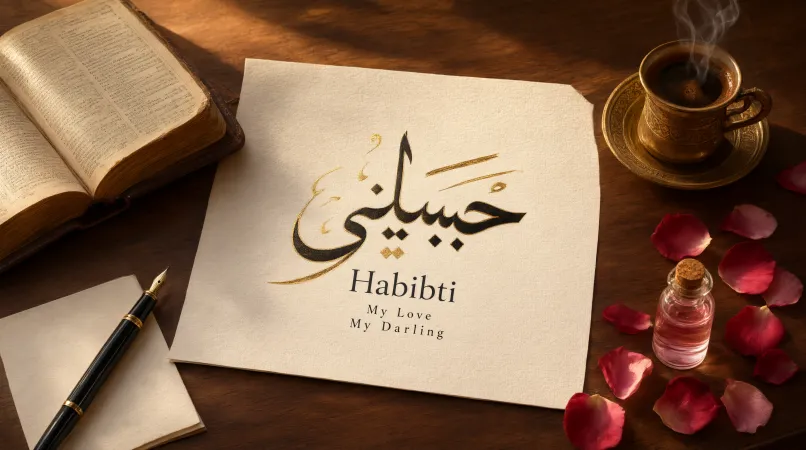
In Arabic, حبيبتي (habibti) is an affectionate form of address for a woman or girl.
It comes from the Arabic root connected with love, affection, and being beloved. The related word habib means “beloved” or “dear.” The feminine form and possessive ending create habibti, giving the sense of “my beloved” or “my dear” when speaking to a female.
The literal meaning is useful, but the real meaning depends on context.
For example:
- A boyfriend may say “habibti” to his girlfriend as “my love.”
- A mother may say “habibti” to her daughter as “my dear.”
- A close female friend may use it as a warm way to address another woman.
- Someone may use it casually in some Arabic-speaking communities.
So, translating habibti as only “girlfriend” or “romantic partner” would be incorrect.
Is Habibti Romantic?
Sometimes, but not always.
This is one of the most important things to know about the word.
When a romantic partner calls a woman habibti, it can clearly mean “my love” or “my darling.” But the same word can also be used between family members or friends without romantic feelings.
When Habibti Is Romantic
The word may sound romantic when:
- A boyfriend says it to his girlfriend.
- A husband says it to his wife.
- Someone uses it during a romantic conversation.
- It appears with other clearly romantic language.
For example:
“Good night, habibti.”
In a relationship, this may naturally mean:
“Good night, my love.”
When Habibti Is Friendly
Habibti can also be friendly and warm.
For example:
“Thank you, habibti!”
Here, the speaker may simply mean:
“Thank you, dear!”
It does not automatically mean the two people are dating.
When Habibti Is Used in Family
Family members can also use affectionate words such as habibti.
A mother might say something like:
“Come here, habibti.”
In this setting, it can mean “Come here, my dear” rather than “my romantic love.”
The surrounding conversation is the best clue.
What Does Habibti Mean From a Guy?

If a guy calls a girl habibti, it means he is addressing her with an affectionate Arabic term.
The exact meaning can be:
- My dear
- My darling
- My love
- Sweetheart
- My beloved
But you should not assume that he is romantically interested based on this word alone.
If he is a boyfriend or romantic partner, it may be romantic. If he is a family member, friend, or someone from an Arabic-speaking culture who commonly uses affectionate language, it may simply be warm or friendly.
Context matters more than the word by itself.
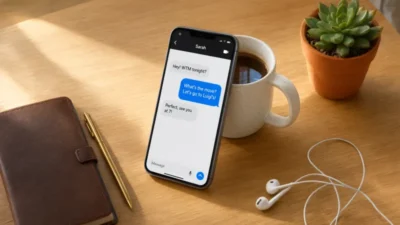
What Does Habibti Mean in Text?
In texting, habibti usually carries the same basic meaning as it does in spoken Arabic.
Someone may write:
“How are you, habibti?”
This could mean:
“How are you, dear?”
Or:
“I miss you, habibti.”
In a romantic conversation, that may mean:
“I miss you, my love.”
The tone of the other messages helps you understand which meaning is intended.
You may also see different spellings online, such as:
- Habibti
- Habibty
- 7abibti
- 7abibty
The spelling 7abibti comes from Arabizi, a way of writing Arabic with Latin letters and numbers. In this system, 7 is commonly used to represent the Arabic letter ح.
How Do You Pronounce Habibti?
A simple English pronunciation is:
ha-BEEB-tee
The middle part sounds similar to “beeb,” followed by “tee.” Exact pronunciation can vary between Arabic dialects.
You can break it into three simple parts:
Ha + beeb + tee
The Arabic spelling is:
حبيبتي
A more detailed transliteration may appear as ḥabībatī, especially in language-learning material.
For everyday English use, however, habibti is the spelling most readers will recognize.
Habibti vs. Habibi: What Is the Difference?
The difference between habibti and habibi is mainly the gender of the person being addressed.
Habibti
Habibti (حبيبتي) is used when speaking to a female.
It can mean:
- My dear
- My darling
- My love
- My beloved
Habibi
Habibi (حبيبي) is generally used when speaking to a male.
It can also mean:
- My dear
- My darling
- My love
- My beloved
Both words come from the same Arabic family of words related to love and being beloved.
Easy Way to Remember
Habibti = female
Habibi = male
The difference is in the ending, not necessarily in how strong the affection is.
Habibti vs. Habiba
These two words can also confuse new Arabic learners.
Habiba (حبيبة) can mean a beloved woman or female loved one.
Habibti (حبيبتي) has the possessive sense of “my beloved” and is used when addressing a female.
So, if someone directly calls a woman “my dear,” habibti is the relevant form.
Examples of Habibti in a Sentence
Here are simple examples to show how the word can work.
Example 1: Romantic
“Good morning, habibti.”
Meaning:
“Good morning, my love.”
Example 2: Friendly
“You look great today, habibti.”
Meaning:
“You look great today, dear.”
Example 3: Family
“Come here, habibti.”
Meaning:
“Come here, my dear.”
Example 4: Caring
“Take care, habibti.”
Meaning:
“Take care, dear.”
Example 5: Texting
“Are you okay, habibti?”
Depending on the relationship, this could mean:
“Are you okay, my dear?”
or:
“Are you okay, my love?”
The surrounding conversation tells you which one fits.
Can Friends Say Habibti?
Yes.
Close friends, especially in Arabic-speaking communities, may use affectionate words such as habibti without any romantic meaning. In some cultures and dialects, it can be a natural part of warm everyday speech.
For example, two close female friends might use the word while talking, joking, or showing support.
This is why someone unfamiliar with Arabic may misunderstand the word. An English speaker might hear “my love” and assume romance, while an Arabic speaker may hear a normal affectionate expression.
Can a Woman Say Habibti to Another Woman?
Yes.
A woman can call another woman habibti. The relationship could be:
- Friends
- Sisters
- Mother and daughter
- Other family members
- Close acquaintances, depending on culture and setting
The word itself does not tell you that the relationship is romantic.
Can a Man Say Habibti?
Yes.
A man can say habibti when addressing a female.
For example:
“Thank you, habibti.”
The word is feminine because the person being addressed is female.
If he is speaking to a male, habibi is generally the appropriate form.
Is Habibti an Islamic Word?
Habibti is an Arabic word, not a special Islamic religious term.
It is an expression of affection that can be used in ordinary Arabic conversation. Its meaning is connected to love, affection, and being beloved.
Because Arabic is used in many different countries and communities, the word can appear in both religious and everyday settings.
It is better to understand habibti as an Arabic term of affection rather than assuming it has a specific religious meaning.
Where Is Habibti Used?
Habibti is understood across many Arabic-speaking communities, although pronunciation and everyday usage can differ by region.
You may hear or see it in:
- Family conversations
- Friendships
- Romantic relationships
- Movies and TV
- Music
- Social media
- Text messages
- Everyday conversations
Arabic dialects can differ, so the exact sound and level of casual use may vary.
What Does Habibti Mean in Different Contexts?
The easiest way to understand habibti is to look at the situation.
| Context | Possible meaning |
| Romantic partner | My love |
| Parent to daughter | My dear |
| Close friend | Dear / darling |
| Family member | My dear / sweetheart |
| Casual social use | Dear / lovely |
| Text message | My love / my dear |
This shows why there is no single English word that works perfectly in every situation.
How Should You Reply to Habibti?
Your reply depends on your relationship with the person.
If someone uses habibti in a friendly way, you can respond normally.
For example:
- “Thank you!”
- “Aww, thank you!”
- “You’re so sweet.”
- “Thanks, dear!”
If the person is speaking romantically, your response can match the tone of the conversation.
If you are learning Arabic, you do not need to use habibti just because someone else used it. It is better to understand the context and use words naturally.
Common Questions About Habibti
Does habibti mean my love?
Yes. “My love” is one common English translation of habibti. It can also mean “my dear,” “my darling,” or “my beloved,” depending on the situation.
Does habibti mean girlfriend?
No. Habibti does not literally mean “girlfriend.”
It is an affectionate term used when addressing a female. A romantic partner may use it for his girlfriend, but family members and friends can also use the word.
Does habibti mean sweetheart?
Yes, “sweetheart” can be a natural English translation in some situations.
The best translation depends on the relationship and tone.
Is habibti only for women?
Yes, the form habibti is the feminine form used when addressing a female. The corresponding masculine form is generally habibi.
Is habibti always romantic?
No.
It can be romantic, friendly, familial, or simply affectionate. Context is important.
What is the male version of habibti?
The male counterpart is habibi (حبيبي).
Both words express affection, but the form changes depending on the gender of the person being addressed.
How do you write habibti in Arabic?
Habibti is written:
حبيبتي
A fully vowelled version may be written حَبِيبَتِي.
How do you pronounce habibti?
A simple pronunciation is:
ha-BEEB-tee
The exact pronunciation may vary slightly between Arabic dialects.
Can I call my female friend habibti?
You can, especially if that style of affectionate language is natural in your relationship and cultural setting. In many Arabic-speaking contexts, friends and family use the word without romantic intent.
Article Summary
Habibti (حبيبتي) is an Arabic term of affection that usually means “my love,” “my darling,” “my dear,” or “my beloved.” It is the feminine form used when addressing a girl or woman.
The word can be romantic, but it is not always romantic. Arabic speakers may use habibti with romantic partners, family members, close friends, and other people in warm social settings. The relationship and tone give the word its exact meaning.
The masculine counterpart is habibi (حبيبي). A simple English pronunciation of habibti is ha-BEEB-tee.
Conclusion
So, what does habibti mean? In simple terms, habibti means “my love,” “my darling,” “my dear,” or “my beloved” in Arabic when speaking to a female.
However, the word does not automatically mean romance. A romantic partner may use it as “my love,” while a parent, friend, or family member may simply mean “my dear.” This makes context very important.
If you see habibti in a text, message, song, or social media post, look at who said it and what the rest of the conversation says. That will usually tell you whether the word is romantic, friendly, or simply affectionate.
Read More post
HYD Meaning in Text: What Does This Slang Stand For
What Does Uhm Mean in Text? Meaning, Uses, and Examples
What Does YK Mean in Text? Definition, Uses, and Examples

Olivia Bennett is a dedicated content writer passionate about slang, word meanings, and digital communication. She creates simple and helpful content to make language easy for everyone to understand.